Quality Control Standards for Charcoal Briquette Export
The global demand for sustainable and high-efficiency alternative fuels has driven a massive surge in the popularity of coconut shell charcoal briquettes. For international buyers, sourcing these products from premium manufacturers is not just about finding a competitive price; it is about ensuring absolute consistency, safety, and performance. At the heart of this successful international trade lies a rigid commitment to global compliance. For premium manufacturers supplying markets across Europe, the Middle East, and North America, implementing rigorous quality control standards for charcoal briquette export is the definitive benchmark that separates industry leaders from the rest.
Maintaining these precise metrics requires a state-of-the-art production ecosystem. Every single phase of manufacturing must undergo strict laboratory testing and systematic evaluation. By adhering to international frameworks, suppliers ensure that every batch leaving the facility operates at peak efficiency, burns cleanly, and safely complies with cross-border shipping regulations.
Phase 1: Raw Material Inspection and Pure Sourcing
High-quality output is entirely dependent on the integrity of the input. The foundation of premium export-grade briquettes relies heavily on the selective sourcing and meticulous screening of raw materials.
- 100% Coconut Shell Authenticity: Premium manufacturing demands the exclusive use of fully matured, clean coconut shells. Any contamination from wood charcoal, soil, or coconut husk fiber will drastically lower the fixed carbon content and increase unwanted ash output.
- Moisture Sorting: Raw coconut charcoal char must be meticulously checked for moisture levels before grinding. High moisture at the initial stage disrupts the binding process and decreases the overall heating value of the final product.
- Foreign Matter Elimination: Before entering the crushing machinery, raw materials pass through multiple magnetic separators and manual screening tables to eliminate stones, metallic debris, and dirt.
- Granulometry and Mesh Optimization: The charred shells are pulverized into a very specific micron size. Achieving a uniform particle distribution ensures that when the binder is added, the mixture achieves maximum density during extrusion.
Phase 2: Chemical Property Controls and Laboratory Benchmarks
Export markets enforce strict thresholds regarding chemical composition. A professional laboratory setup must test every production run to guarantee the final product hits exact technical specifications.
To meet global standards, the fixed carbon content must be kept at a minimum of 75% to 80%, which directly dictates the longevity and steadiness of the burn. Concurrently, volatile matter must be restricted to a maximum of 13% to 15% because lower volatile matter prevents toxic smoke and foul odors during use. Total moisture is strictly capped at a maximum of 6% to 8% to guarantee quick ignition and high heat output. Finally, the total ash content must not exceed 2% to 3%, ensuring a clean burn and easy cleanup for end-users.
- Calorific Value Verification: Export-grade briquettes must consistently generate a gross calorific value between 7,200 kcal/kg and 7,500 kcal/kg. This high energy output ensures a long, powerful burn ideal for both shisha lounges and premium BBQ applications.
- Ash Color Evaluation: The ash color is a vital aesthetic and quality metric for consumers. Lab teams closely monitor the burning process to ensure the ash remains a clean white or light grey, indicating zero chemical additives or clay fillers.
Phase 3: Physical Durability and Structural Testing
Briquettes must endure rigorous handling, ocean transport, and high-temperature usage without cracking, crumbling, or losing their structural shape.
- The Drop Test Evaluation: This critical test simulates the harsh realities of logistics. Individual briquettes are dropped from a standardized height of 1.5 meters onto a solid concrete surface multiple times. A passing grade requires the briquette to remain completely intact with zero fractures.
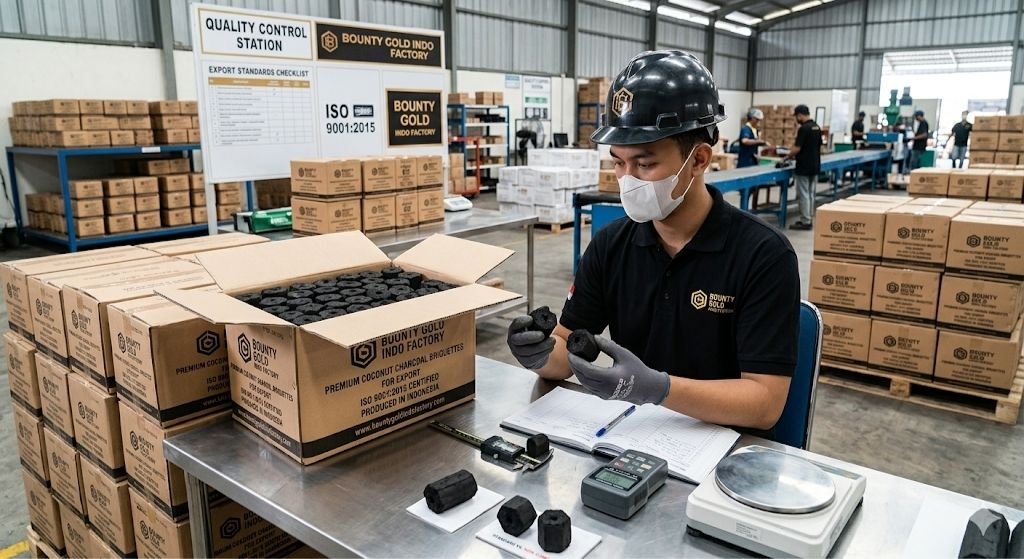
- Crushing Strength Measurement: Specialized hydraulic testing equipment applies progressive vertical pressure to measure the exact load a briquette can withstand. High mechanical strength prevents the product from shattering inside the packaging during long-haul sea freight transits.
- Ignition Speed and Burn Duration: Sample briquettes from each batch are lit under controlled laboratory conditions. For shisha-grade cubes, a standard burn duration must comfortably exceed 1.5 to 2 hours, maintaining a steady heat output without cracking open.
- Shatter Resistance Index (SRI): This process calculates weight loss by tumbling briquettes inside a rotating drum. A high SRI percentage guarantees that consumers receive whole, dust-free shapes rather than broken fragments.
Phase 4: Packaging Standards and Moisture Protection
Even the highest quality briquette can degrade if it is exposed to ambient humidity or physical friction during international maritime transit. Packaging acts as the final line of defense.
- Inner Plastic Liners: Every single inner box must be lined with a high-density, moisture-proof plastic polybag. This prevents the briquettes from absorbing environmental humidity while sitting inside shipping containers.
- Master Carton Integrity: Master corrugated cartons must possess a high burst-test rating (typically double-wall or triple-wall cardboard). This heavy-duty structure prevents boxes from collapsing when stacked multiple layers high inside ocean containers.
- Precise Weight Calibration: Automated digital scales verify that each individual inner box and master carton meets the exact net weight specifications requested by international clients, eliminating customs discrepancies.
- Aesthetic and Brand Compliance: High-definition printing must align perfectly with your custom branding requirements, ensuring barcode scannability, clear ingredient listings, and precise country-of-origin markings.
Phase 5: Maritime Safety and Self-Heating Compliance
Because charcoal is legally classified as a Dangerous Good (DG) under Class 4.2 (substances liable to spontaneous combustion), passing specialized international safety protocols is a strict legal requirement for customs clearance.
- Self-Accelerating Decomposition Test (SADT): This mandatory assessment ensures that the briquettes will not spontaneously ignite when exposed to elevated temperatures inside a closed container during transit across tropical sea routes.
- Vanning Certificates and IMDG Compliance: Working alongside accredited international surveyor firms (such as SGS or Carsurin), factories must secure official inspection reports and Vanning Certificates to legally book space on major ocean liners.
- Container Preparation Guidelines: Before loading, shipping containers are thoroughly inspected for structural holes, water leaks, and cleanliness. Cargo is stacked strategically to allow adequate ventilation and heat dissipation throughout the voyage.
The Strategic Value of Production Integrity
Implementing strict quality control standards for charcoal briquette export does more than just minimize factory waste; it builds sustainable international partnerships. For global distributors, wholesalers, and private labels, partnering with a manufacturer that controls every metric from raw coconut shell to container sealing completely removes the operational risks of importing.
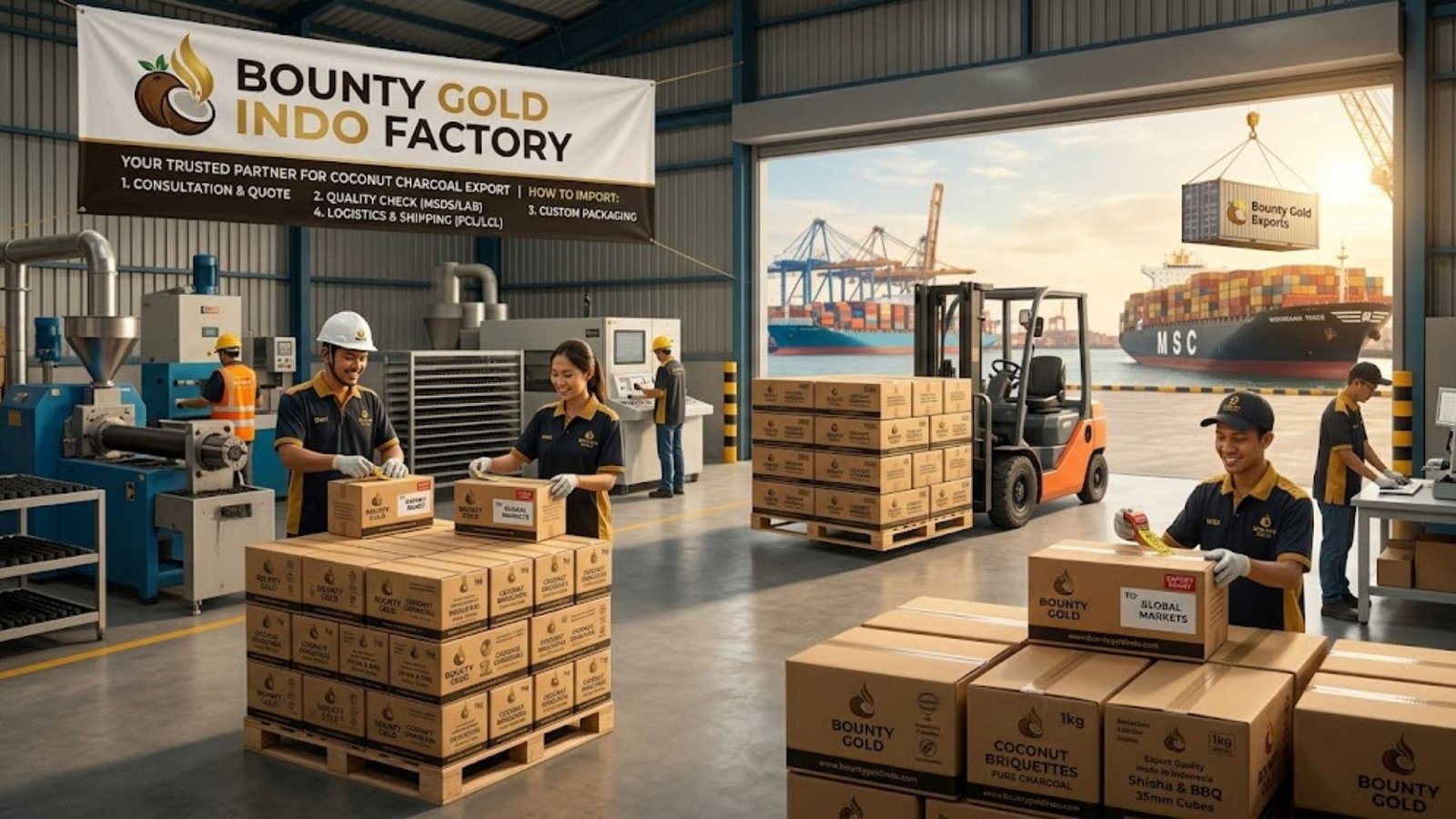
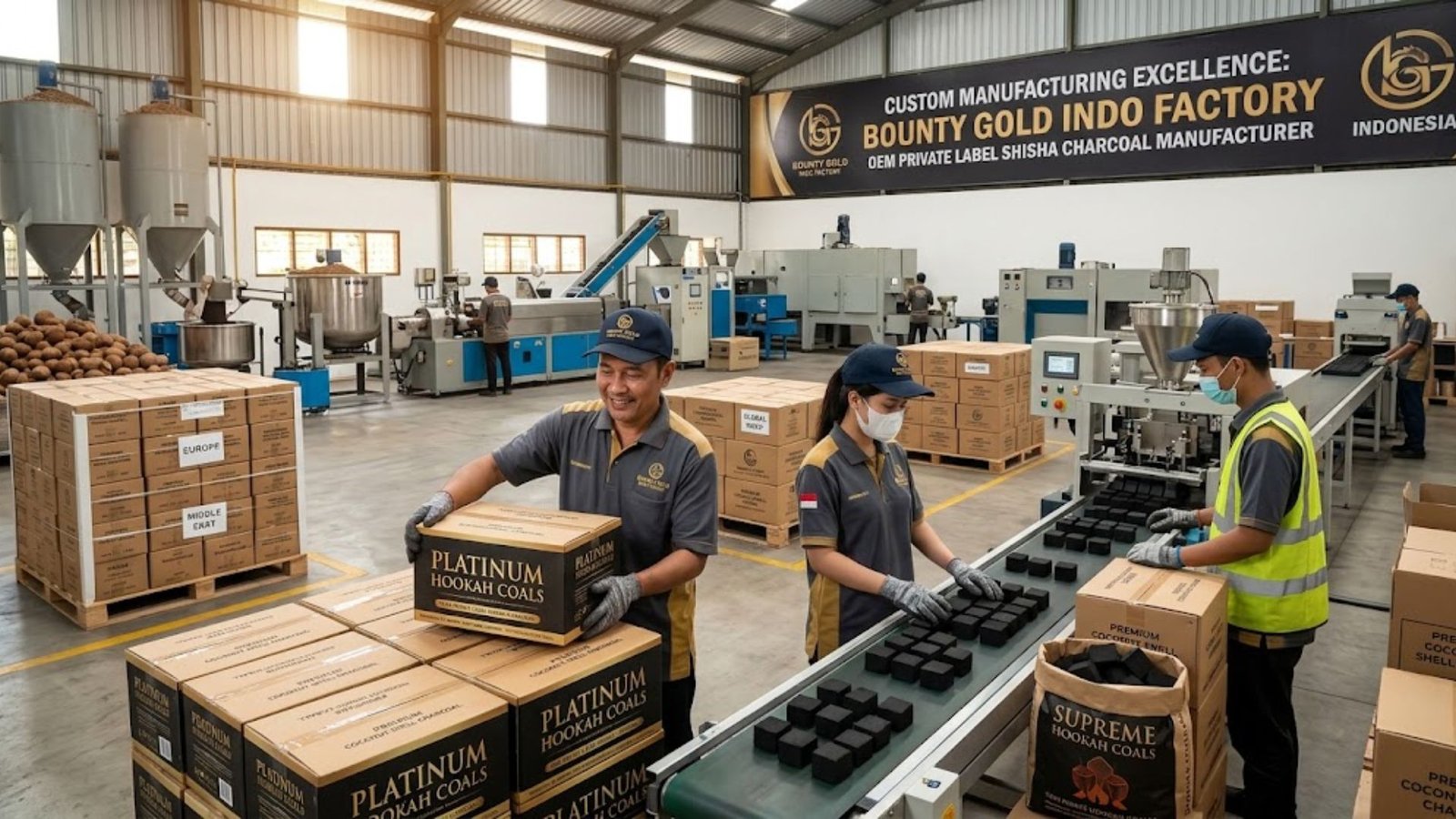
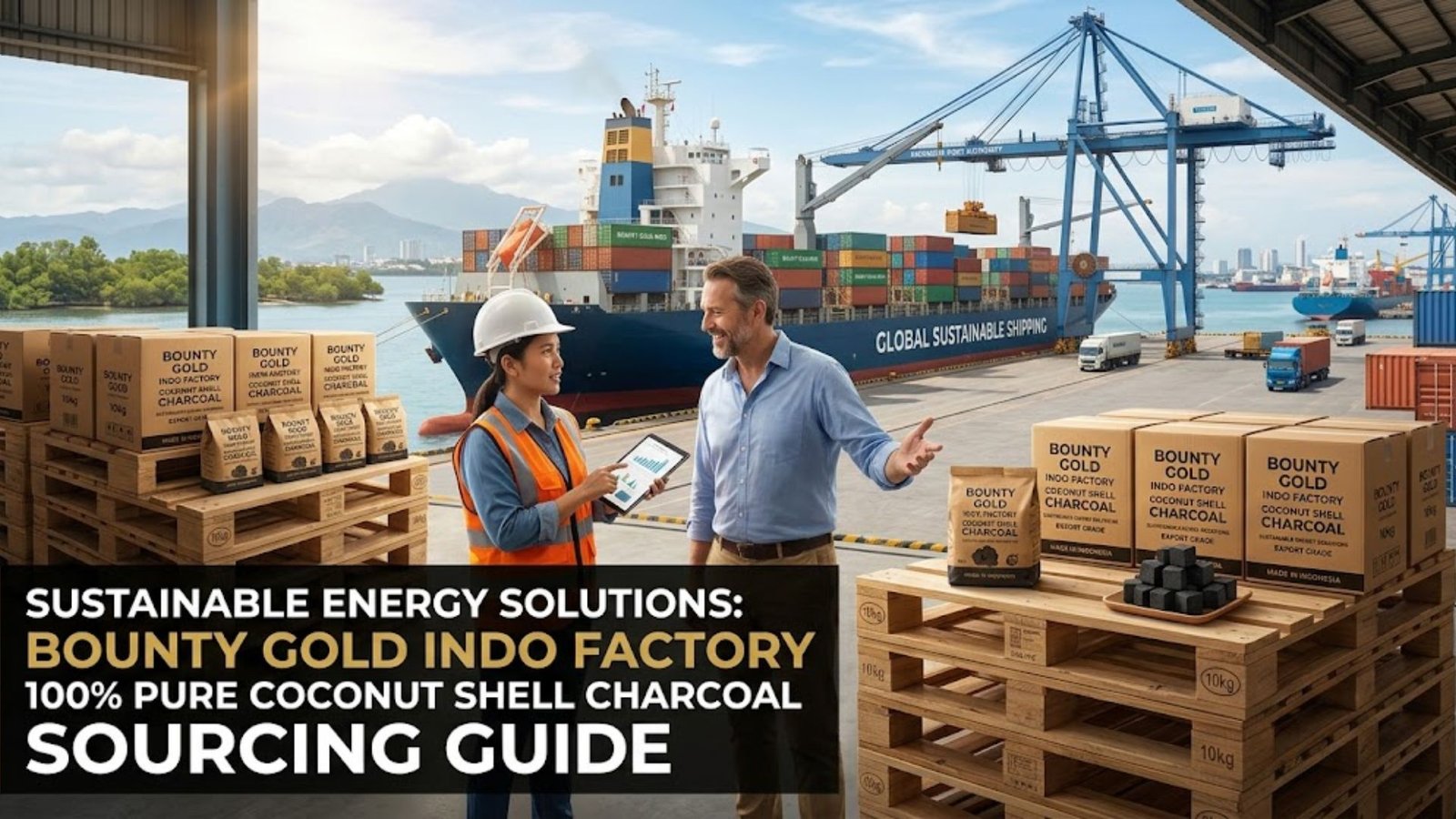
By combining traditional raw material purity with modern laboratory testing, premier factories provide global markets with a product that ignites quickly, burns flawlessly, and safely complies with international customs laws. If you are ready to elevate your supply chain with fully certified, premium-grade Indonesian coconut charcoal briquettes tailored to your exact private label specifications, explore our certified manufacturing processes and comprehensive product catalog at Bounty Gold Indo Factory.