Master the Sourcing Process: Bounty Gold Indo Factory How to Source High Quality Coconut Charcoal Briquettes
In the fast-evolving global charcoal industry, securing a reliable supply of top-tier charcoal briquettes can make or break a business. Importers, wholesalers, and brand owners often face significant challenges, including erratic burning behavior, excessive ash residue, chemical odors, and inconsistent product specifications. Understanding Bounty Gold Indo Factory How to Source High Quality Coconut Charcoal Briquettes provides international buyers with the ultimate strategic roadmap to streamline their supply chain, eliminate middleman markups, and secure premium products directly from Indonesia’s premier manufacturing hub.
Indonesia is globally recognized as the epicenter of high-calorific coconut shell charcoal production. However, navigating the Indonesian manufacturing landscape requires clear criteria, rigorous quality control awareness, and an understanding of key chemical and physical metrics.
Key Criteria for Sourcing Premium Coconut Charcoal
Sourcing high-grade coconut charcoal goes beyond finding a low price point. To protect your brand reputation and ensure long-term customer loyalty, buyers must evaluate potential suppliers based on critical technical specifications.
Essential Quality Parameters:
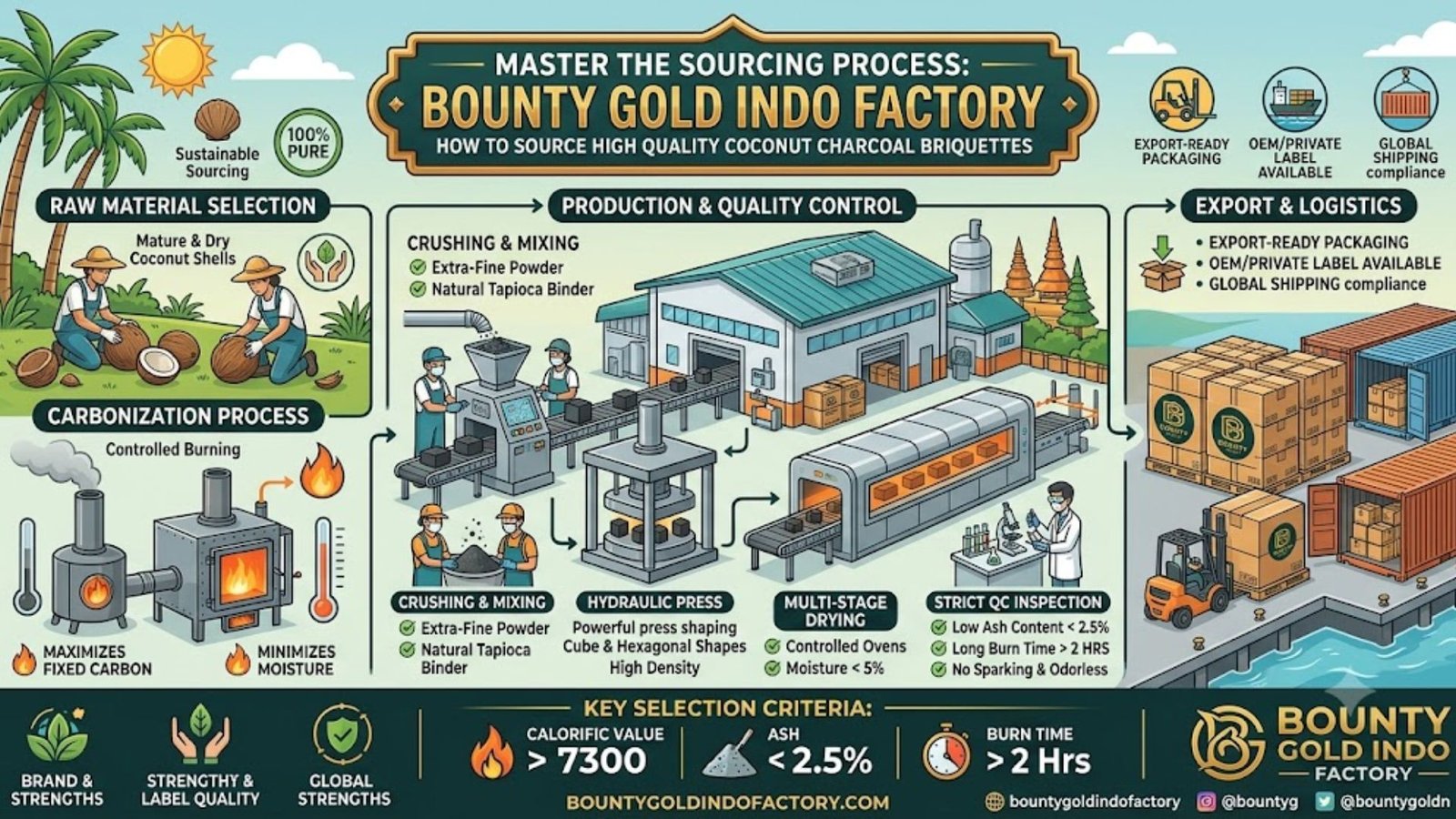
Fixed Carbon Content: High-grade briquettes should possess a fixed carbon ratio exceeding 80% to ensure prolonged ignition and consistent heat output.
Low Moisture Content: Moisture levels must remain strictly below 5% to facilitate effortless lighting and prevent structural cracking during heat exposure.
Ultra-Low Ash Percentage: Premium shisha and barbecue charcoal leaves behind less than 2.5% ash, featuring a desirable light gray or white color.
100% Organic Composition: True quality charcoal utilizes pure coconut shells bound solely with natural tapioca starch, completely free from dangerous chemical accelerants, sulfur, or mineral fillers.
Step-by-Step Guide to Direct Factory Procurement
Establishing a direct relationship with a reputable manufacturer is the most effective strategy to ensure consistent quality and competitive pricing.
Step 1: Verify Direct Manufacturing Capabilities
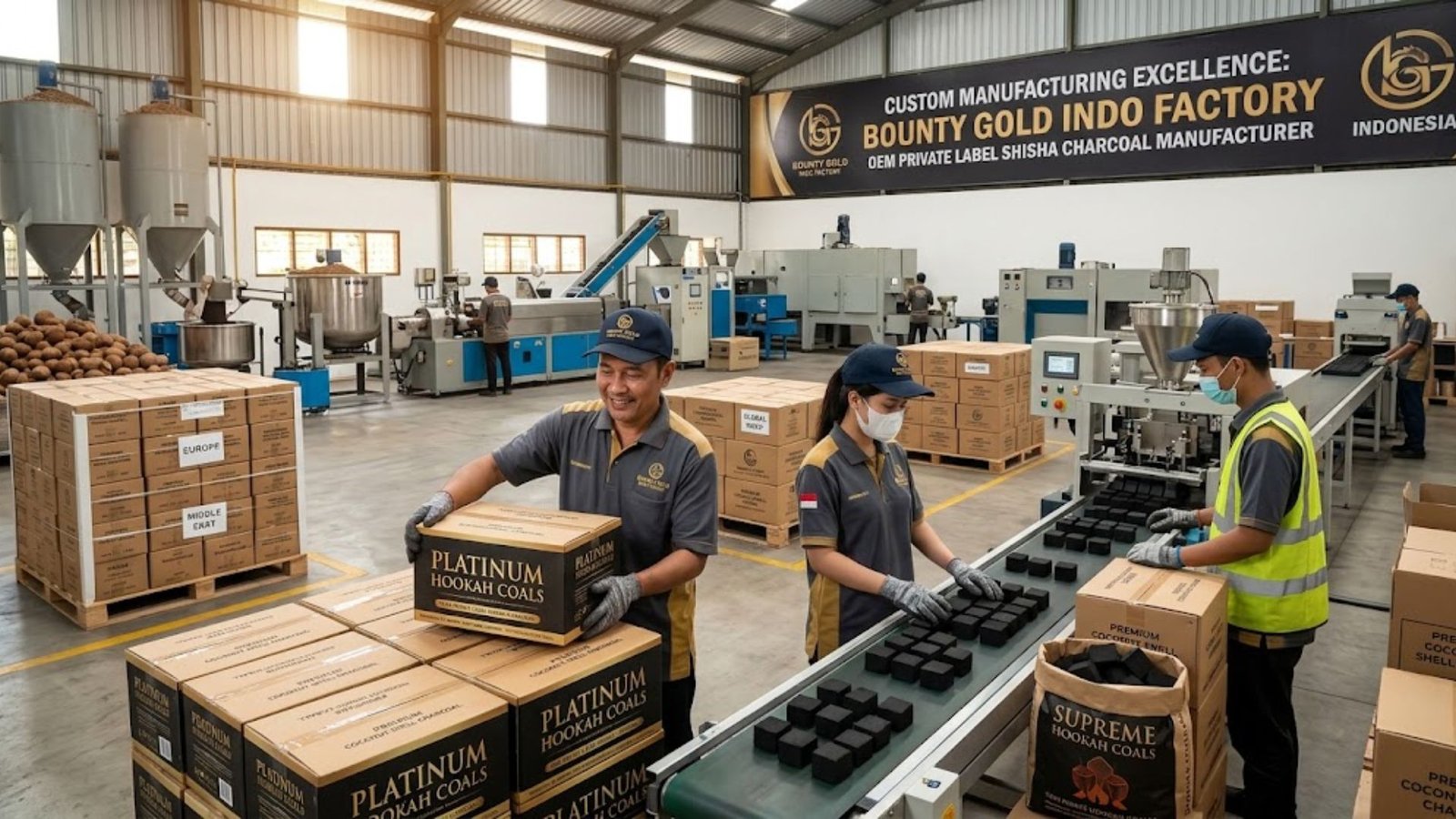
Always partner with genuine direct producers rather than third-party brokers or trading agencies. Direct factories possess dedicated carbonization equipment, high-pressure extrusion systems, and controlled drying kilns, enabling complete oversight of every production batch.
Step 2: Request Accredited Laboratory Test Reports
Professional manufacturers subject their batches to independent laboratory testing (such as Carsurin or SGS). These reports verify moisture levels, ash content, volatile matter, and calorific value before shipment.
Step 3: Evaluate Custom OEM and Packaging Flexibility
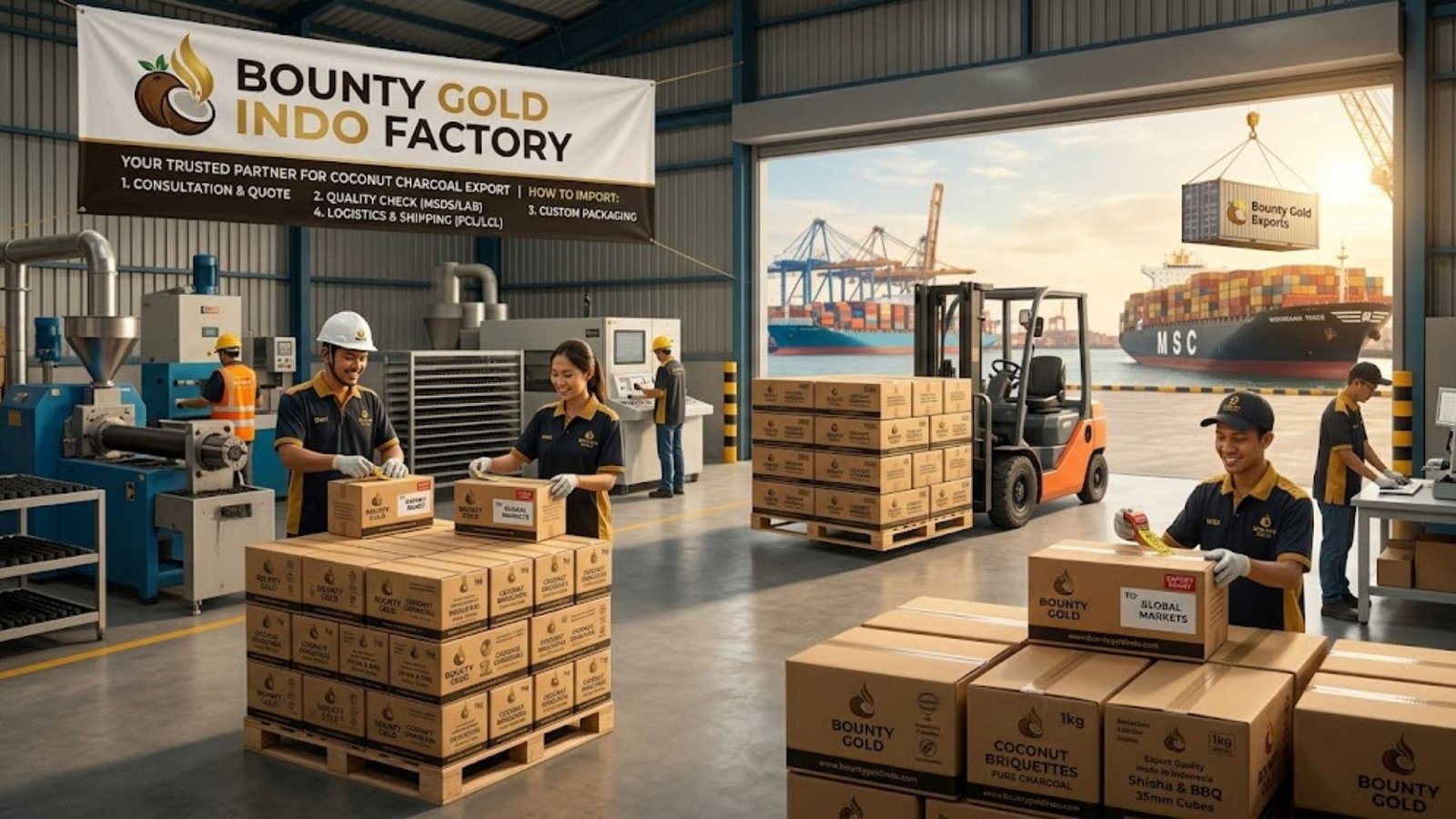
A superior production partner offers complete customization options, including private label artwork, custom box dimensions (1kg, 3kg, or 10kg master cartons), inner plastic sealing, and specialized briquette shapes (Cubes, Flats, Hexagonals, or Kaloud cuts).
To learn more about OEM solutions, custom box design guidelines, and factory production capacities, visit Bounty Gold Indo Factory.
The Production Process Behind World-Class Coconut Charcoal
Understanding how raw coconut shells are transformed into premium export-ready briquettes helps buyers appreciate the strict quality controls implemented by industry leaders:
Ethical Raw Material Sourcing: Mature coconut shells are harvested from sustainable agricultural plantations across the Indonesian archipelago.
Controlled Carbonization: Raw shells are slowly carbonized in oxygen-controlled kilns to maximize fixed carbon retention and eliminate volatile gases.
Crushing and Fine Milling: Carbonized shells are ground into ultra-fine charcoal dust to guarantee a smooth surface and maximum density.
Natural Binding and Extrusion: The charcoal powder is mixed with 100% natural tapioca binder and water, then extruded under high hydraulic pressure to form dense, uniform shapes.
Multi-Stage Drying: Briquettes are cured inside specialized temperature-regulated ovens for several days, lowering moisture levels to absolute minimums.
Strict Quality Inspection: Each lot undergoes drop testing, burn duration evaluation, and visual sorting prior to final packaging.
Logistics, Export Compliance, and Freight Handling
Exporting coconut charcoal requires strict adherence to international maritime safety standards. Coconut charcoal is classified as a self-heating substance (UN 1361 / UN 1362) and requires specialized documentation for smooth ocean transport.
When working with an experienced manufacturer, your logistics process should include:
Vanning Certificates: Proper container inspection and loading reports.
SDTD and Self-Heating Test Approval: Mandatory safety testing confirming the product is safe for maritime transit.
Material Safety Data Sheet (MSDS): Comprehensive safety documentation required by international shipping lines and port authorities.
By partnering with Bounty Gold Indo Factory How to Source High Quality Coconut Charcoal Briquettes, global importers gain access to a fully compliant, highly transparent export ecosystem designed for seamless delivery to major international ports.
#CoconutCharcoalSourcing #BountyGoldIndoFactory #IndonesianCharcoalManufacturer #HighQualityBriquettes #ExportQualityCharcoal #PrivateLabelCharcoal #DirectFactoryWholesale