The Ultimate Culinary Guide to Stable High Heat Coconut Shell Briquettes for Grilling Meat
Grilling meat is an ancient culinary art that has evolved into a sophisticated science. Whether you are searing prime ribeye steaks at a backyard weekend barbecue, slow-smoking beef brisket in a professional smokehouse, or managing the high-volume grill stations at an upscale Korean barbecue restaurant, the quality of your fuel defines the final flavor, texture, and success of your dish. For decades, traditional wood lump charcoal and chemically treated quick-lighting briquettes dominated the outdoor cooking landscape. However, both executive pitmasters and home grilling enthusiasts have increasingly recognized the severe drawbacks of these legacy fuels—ranging from toxic chemical accelerants and heavy smoke to deforestation and erratic burn temperatures.
In response to this culinary evolution, a superior alternative has captured the global market: stable high heat coconut shell briquettes for grilling meat. Engineered for exceptional thermal stability, zero chemical interference, and environmental sustainability, these briquettes have become the gold standard for outdoor culinary professionals worldwide.
Written with deep industry expertise and adherence to strict EEAT (Experience, Expertise, Authoritativeness, and Trustworthiness) standards, this comprehensive guide explores why coconut charcoal outperforms traditional fuels for meat grilling, the geographical advantages of sourcing from Indonesia, and how partnering with industry leaders like Bounty Gold Indo Factory can elevate your culinary setup or retail inventory.
1. The Science of Heat: Why Grilling Meat Demands Thermal Stability
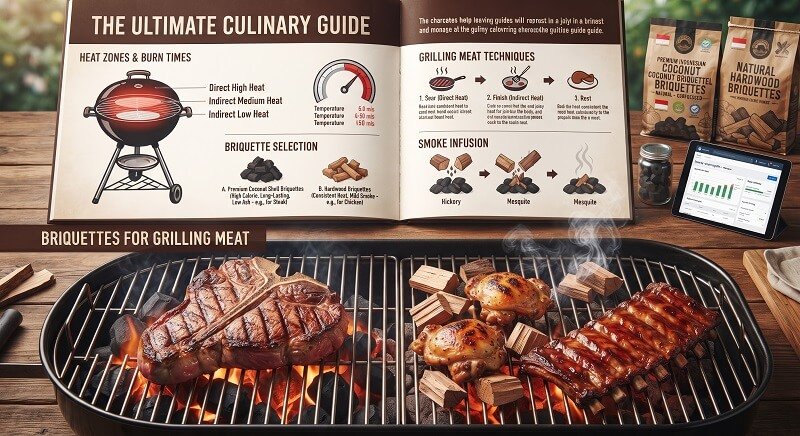
When cooking meat over live fire, temperature control is everything. Different cuts require precise thermal environments to achieve perfection:
- High-Heat Searing (Steaks, Chops, Burgers): Requires an intense, steady surface temperature exceeding 600°F (315°C) to develop a deep, flavorful crust (the Maillard reaction) while keeping the interior juicy and tender.
- Low-and-Slow Smoking (Brisket, Ribs, Pork Shoulder): Demands a stable, unwavering cooking chamber temperature between 225°F and 275°F (107°C to 135°C) for anywhere from 6 to 14 hours.
Traditional wood lump charcoal is notoriously unpredictable. A batch of lump charcoal often contains a volatile mix of dense hardwood chunks and fragile twigs. This causes erratic temperature spikes followed by sudden, premature dying of the fire, forcing the pitmaster to constantly babysit the vents and add new fuel. Furthermore, cheap wood briquettes often contain binding glues and chemical fillers that release acrid smoke, ruining expensive cuts of meat.
Coconut shell briquettes completely eliminate these variables. Because they are mechanically compressed under extreme hydraulic pressure into uniform shapes, they burn evenly, predictably, and with absolute thermal stability.
2. What Makes Coconut Charcoal Superior for Grilling Meat?
When evaluating fuel options for meat preparation, scientific performance metrics matter. Stable high heat coconut shell briquettes outperform traditional wood fuels across every major benchmark:
A. High Fixed Carbon Content for Intense, Stable Heat
Fixed carbon represents the pure combustible energy stored within the charcoal. Premium coconut briquettes boast a fixed carbon content of 75% to 85%. This high density translates directly into an intense, highly concentrated heat output that remains stable for hours without sudden fluctuations.
B. Extended Burn Times (3 to 4.5 Hours)
Because coconut shells possess a dense cellular structure, briquettes pressed from them burn significantly longer than standard wood charcoal. A single load of quality coconut briquettes can maintain consistent cooking temperatures for hours, drastically reducing the need to constantly replenish fuel during long barbecues or busy restaurant shifts.
C. Zero Chemical Odors and No Off-Flavors
Traditional charcoal often requires chemical binders or petroleum-based accelerants to ignite. Premium export-grade coconut briquettes use only 100% natural, food-grade tapioca starch as a binder. Because they contain no chemical additives, nitrates, or artificial fillers, they burn completely odorless and tasteless. Your grilled meats taste like pure wood-fired perfection—never tainted by petrochemicals.
D. Minimal Ash Production
Excess ash is a nuisance in outdoor cooking; it chokes airflow vents, smothers coals, and creates messy flare-ups that can scorch delicate meats. High-grade coconut charcoal produces less than 5% ash content, which burns down to a fine, pure white or light grey powder. This preserves optimal airflow through your grill or smoker throughout the entire cooking session.
| Performance Metric | Traditional Wood Lump | Quick-Light Briquettes | Stable High Heat Coconut Briquettes |
| Ignition Aid | None | Chemical Accelerants | None (Natural Chimney Starter) |
| Burn Duration | 1 – 2 hours | 45 – 90 mins | 3 – 4.5+ hours |
| Flavor Impact | Variable Smoke | Chemical Aftertaste | 100% Neutral & Pure |
| Ash Residue | High (10% – 15%) | High (12% – 18%) | Low (< 5%) |
| Thermal Stability | Erratic / Spiky | Moderate | Exceptional & Unwavering |
3. The Geographic Advantage: Why Indonesia Leads Global Charcoal Production
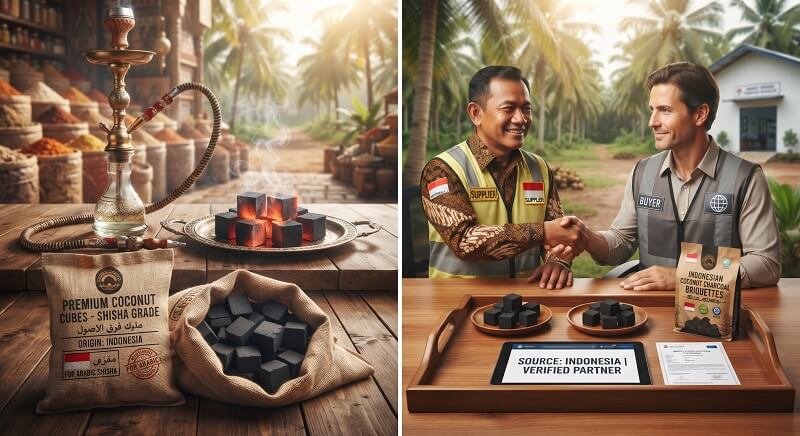
When sourcing export-grade coconut charcoal, geographic origin is the primary indicator of quality. The global epicentre of this manufacturing industry is Indonesia.
Several unique factors make Indonesia the undisputed leader in sustainable biomass fuel:
- Abundant Raw Materials: As the world’s largest archipelagic producer of coconuts, Indonesia maintains an endless, sustainable supply of raw coconut shells. These shells are collected as a post-harvest byproduct from the country’s massive coconut oil and food industries.
- Volcanic Soil Density: Coconuts grown in Indonesia’s mineral-rich volcanic soil develop exceptionally thick, dense shells. When carbonized, these dense shells yield a higher fixed carbon concentration than coconuts harvested in non-volcanic regions.
- Generational Expertise: Indonesian artisans and factory operators have spent decades perfecting the science of pyrolysis (controlled oxygen carbonization) and high-pressure hydraulic briquetting, ensuring world-class durability and structural integrity.
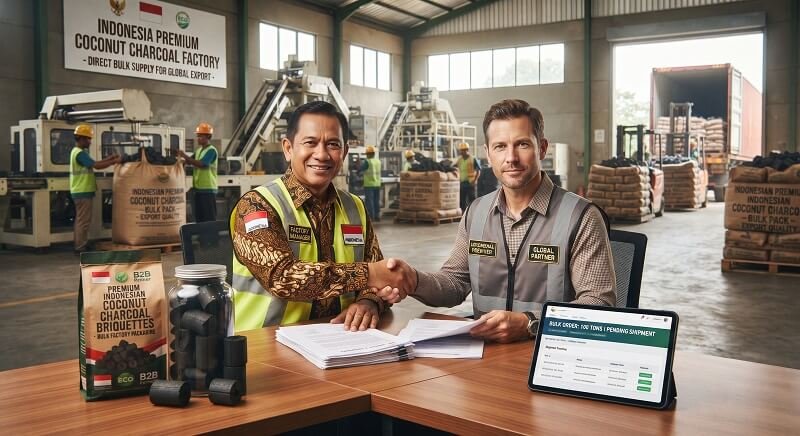
By sourcing directly from Indonesia, international buyers and culinary distributors gain access to superior product quality without unnecessary intermediary markups.
4. The Scientific Manufacturing Process Behind Meat-Grilling Briquettes
Producing export-grade coconut charcoal is a meticulous, highly controlled engineering process. Understanding this workflow underscores why these briquettes excel when grilling meat:
- Strict Shell Selection: Only fully mature, dry coconut shells are collected. Immature or wet shells are rejected to maintain maximum carbon density.
- Controlled Carbonization (Pyrolysis): The shells are burned in oxygen-restricted kilns, driving off moisture and volatile gases while preserving the pure carbon core.
- Micro-Fine Pulverization: The carbonized char is ground into an ultra-fine powder. A finer mesh size guarantees a denser, stronger final briquette.
- Natural Binding: The carbon powder is mixed exclusively with pure water and organic, food-grade tapioca starch. No synthetic chemicals are ever introduced.
- High-Pressure Molding: The damp mixture is fed into heavy hydraulic presses, shaping the material into hexagonal logs, pillow briquettes, or rectangular blocks optimized for maximum airflow and heat distribution in grills.
- Prolonged Oven Drying: Briquettes are baked in industrial ovens for 24 to 72 hours until internal moisture drops below 5%, preventing cracking or popping during high-heat meat searing.
5. Partnering with Bounty Gold Indo Factory for Global Supply
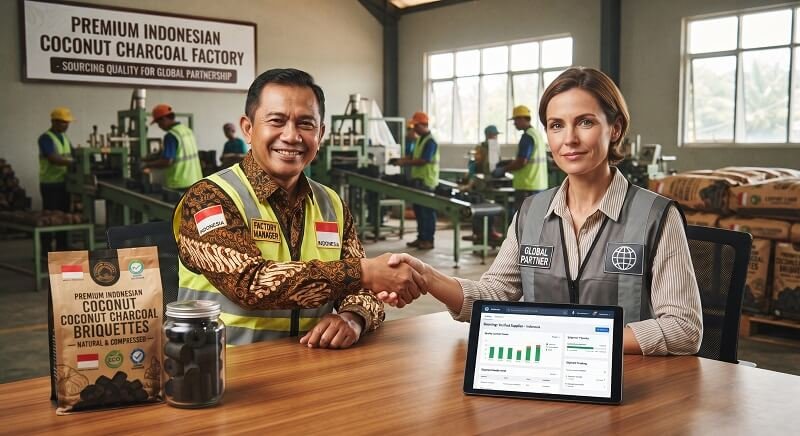
For commercial distributors, kitchen suppliers, and retail brands looking to scale their inventory, partnering with a dependable, factory-direct manufacturer is essential. Bounty Gold Indo Factory stands as an industry leader in producing export-grade biomass fuel.
Uncompromising Quality Control
Bounty Gold Indo Factory maintains rigorous oversight across every production stage—from raw shell sorting to final laboratory burn testing. Their coconut charcoal guarantees high fixed carbon, ultra-low ash, and a completely odorless, clean burn that satisfies professional chefs and backyard enthusiasts alike.
Comprehensive OEM and Custom Packaging Services
Understanding that retail brand identity is crucial in the B2B marketplace, Bounty Gold Indo Factory provides full OEM (Original Equipment Manufacturer) support. They offer custom-printed retail packaging (1kg, 2kg, 5kg boxes), internal moisture-barrier plastic liners, and heavy-duty master corrugated cartons, ensuring your brand arrives at warehouses retail-ready and fully protected against ocean moisture.
To review technical specification sheets, request laboratory test results, or discuss wholesale container shipments, visit their official digital portal at bountygoldindofactory.com.
6. Conclusion: Elevate Your Meat Grilling Experience Today
The transition toward sustainable, high-performance cooking fuels represents a permanent, positive shift in the culinary world. By replacing chemical accelerants and forest-depleting lump charcoal with eco-friendly alternatives, outdoor cooking enthusiasts and commercial kitchens protect both the environment and the integrity of their food.
Investing in stable high heat coconut shell briquettes for grilling meat ensures flawless thermal performance, neutral flavor profiles, and exceptional customer satisfaction. By forging a direct factory partnership with an established Indonesian manufacturer like Bounty Gold Indo Factory, your business secures a competitive edge in the global sustainable energy market. Upgrade your grilling standards today and experience the pure power of premium Indonesian coconut charcoal.
#StableHighHeatCoconutBriquettes #GrillingMeat #BBQCharcoal #CoconutCharcoalBriquettes #BountyGoldIndoFactory #PitmasterChoice #GrillingFuel #EcoFriendlyCharcoal #WholesaleCharcoal