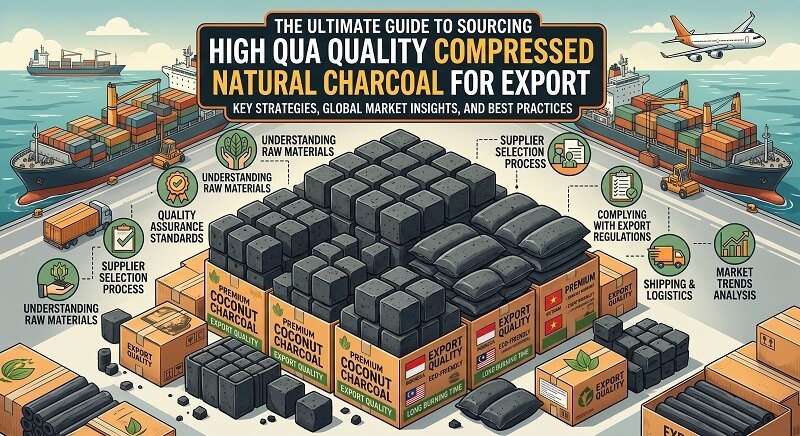
The Ultimate Guide to Sourcing High Quality Compressed Natural Charcoal for Export: A Global B2B Perspective
In recent years, the global energy and culinary markets have witnessed a massive paradigm shift. Consumers and industries alike are moving away from chemical-laden, quick-lighting charcoal products and pivoting toward sustainable, eco-friendly alternatives. At the forefront of this green revolution is high quality compressed natural charcoal for export. Whether it is used for high-end culinary barbecues, luxury shisha and hookah lounges, or industrial heating, the demand for clean-burning, long-lasting, and 100% natural compressed charcoal has never been higher.
For importers, wholesalers, and distributors worldwide, sourcing the right charcoal is a critical business decision. The quality of the charcoal directly impacts end-user satisfaction, repeat business, and brand reputation. This comprehensive guide, written with deep industry expertise (EEAT principles), explores everything you need to know about premium compressed natural charcoal, why Indonesia is the reigning champion of its production (GEO targeting), and how partnering with industry leaders like Bounty Gold Indo Factory can elevate your supply chain.
1. The Global Demand for Sustainable Biomass Fuel
The international market for charcoal is expanding rapidly, specifically in regions like the Middle East, Europe, North America, and East Asia. This surge is driven by strict environmental regulations and a growing consumer preference for organic, non-toxic products.
Traditional lump charcoal, while popular, often suffers from inconsistent sizes, uneven burn times, and high ash production. Furthermore, if not sourced responsibly, it contributes to deforestation. Enter compressed natural charcoal—a product engineered for perfection. By utilizing biomass waste, such as coconut shells or sawdust from sustainable forestry, manufacturers create a high-density briquette that outperforms traditional charcoal in every metric.
The keywords driving this industry are sustainability, consistency, and efficiency. Importers are specifically looking for high quality compressed natural charcoal for export because it guarantees a standardized product that can survive long transoceanic shipping routes without degrading or turning to dust.
2. What Defines “High Quality” in Compressed Charcoal?
When evaluating high quality compressed natural charcoal for export, buyers must look beyond the packaging. True quality is determined by chemical composition and physical performance. An expert supplier will gladly provide laboratory test results detailing the following metrics:
A. High Fixed Carbon Content
Fixed carbon is the combustible solid leftover after volatile matter is burned off. It is the most critical indicator of charcoal quality. Premium compressed charcoal typically boasts a fixed carbon content of 75% to 85% (and up to 90% for coconut shell shisha charcoal). Higher fixed carbon means a hotter, longer-lasting burn with minimal smoke.
B. Low Ash Content
Ash is the non-combustible residue left after the charcoal burns. For shisha/hookah users, high ash is a dealbreaker as it ruins the flavor and requires constant cleaning. High-quality export charcoal maintains an ash content of under 3% for shisha and under 5% for BBQ. Furthermore, the color of the ash (usually pure white or light grey) is a strong indicator of the raw material’s purity.
C. Low Moisture and Volatile Matter
Moisture content should be kept strictly below 5%. Excess moisture makes the charcoal hard to ignite and can cause it to crack or spit during burning. Volatile matter (the components that turn into gas when heated) should be minimized to ensure the charcoal is smokeless and odorless.
D. Density and Durability
Because this product is destined for the international market, it must withstand the rigors of shipping. High quality compressed natural charcoal for export is extruded or pressed under immense pressure. This high density not only prevents breakage and dust formation during transit but also ensures a uniform, prolonged burn time of up to 3 to 4 hours, depending on the shape and application.
| Metric | Standard BBQ Grade | Premium Shisha Grade |
| Fixed Carbon | 75% – 80% | 80% – 90% |
| Ash Content | < 5% | < 2.5% |
| Moisture | < 6% | < 5% |
| Burn Time | 2 – 4 hours | 1.5 – 2.5 hours |
| Smokeless/Odorless | Yes | Absolute Yes |
3. GEO Focus: Why Indonesia is the Epicenter of Premium Charcoal Production
When discussing high quality compressed natural charcoal for export, it is impossible to ignore the geographic giant of the industry: Indonesia.
Indonesia is globally recognized as the premier origin for high-grade charcoal, particularly coconut shell briquettes. Several geographic and economic factors contribute to this dominance:
- Abundant Raw Materials: As the world’s largest archipelago and a tropical powerhouse, Indonesia has an endless, sustainable supply of coconuts and tropical hardwoods. The coconut shells used are essentially a byproduct of the coconut oil and desiccated coconut industries, making the charcoal 100% sustainable and circular.
- Ideal Climate: The tropical climate allows for year-round harvesting and sun-drying, which is a crucial step in the preliminary phases of charcoal production.
- Artisanal and Technical Expertise: Indonesian manufacturers have spent decades perfecting the carbonization and briquetting processes. The local workforce possesses deep generational knowledge of how to treat biomass to extract the highest possible fixed carbon.
- Strategic Export Hub: With major international ports like Tanjung Priok (Jakarta) and Tanjung Perak (Surabaya), Indonesia is geographically positioned to export seamlessly to the Middle East, Europe, Australia, and the Americas.
By sourcing directly from Indonesia, global buyers bypass middlemen, ensuring competitive pricing without compromising the stringent quality requirements of the international market.
4. The Manufacturing Process: Engineering Perfection
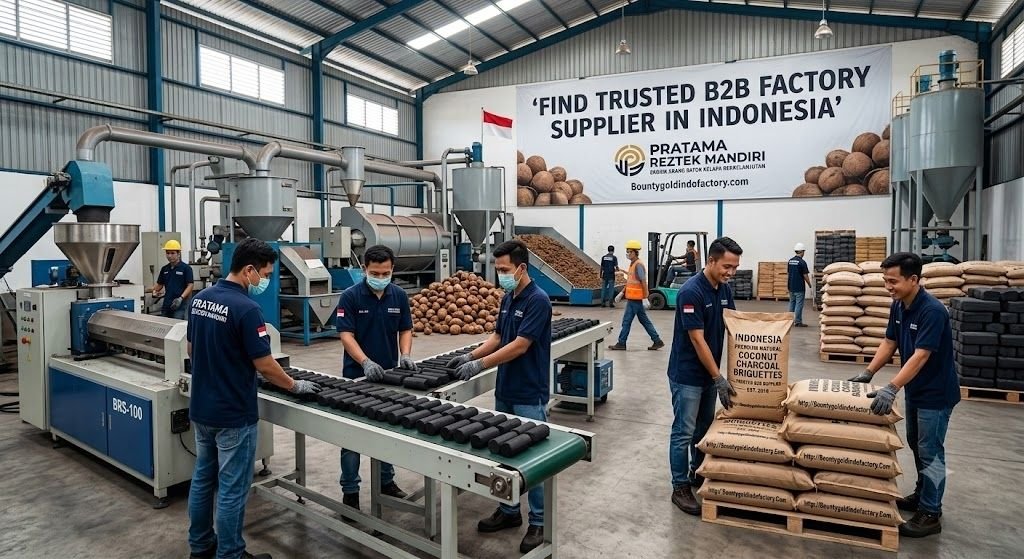
Understanding the manufacturing process establishes trust and highlights the expertise required to produce high quality compressed natural charcoal for export. It is not simply a matter of burning wood; it is a highly controlled, scientific process.
Step 1: Sustainable Sourcing and Selection
The process begins with the careful selection of raw biomass. For premium grades, only mature, fully dried coconut shells or dense hardwood sawdust are selected. These materials must be free of sand, dirt, and impurities.
Step 2: Controlled Carbonization
The raw materials are burned in oxygen-restricted kilns (a process known as pyrolysis or carbonization). This step requires immense skill to ensure the biomass does not turn to ash. The goal is to drive off moisture and volatile gasses, leaving behind pure, carbon-rich char.
Step 3: Crushing and Pulverizing
The carbonized shells or wood are then fed into heavy-duty crushers and pulverized into a micro-fine powder. The finer the powder, the smoother and denser the final briquette will be.
Step 4: Mixing with Natural Binders
To compress the powder into solid shapes, a binder is required. To maintain the “100% natural” and “odorless” claims, top-tier factories use purely organic, food-grade tapioca starch (cassava) mixed with water. No synthetic chemicals, nitrates, or artificial accelerants are ever used.
Step 5: Extrusion and Molding
The damp mixture is fed into high-pressure extrusion machines or hydraulic presses. Depending on the target market, it is molded into specific shapes:
- Cubes (22mm, 25mm, 26mm): The global standard for Shisha/Hookah.
- Hexagonal / Finger Tubes: Ideal for BBQ and culinary grilling.
- Pillow Shapes: Commonly used for casual grilling and industrial heating.
Step 6: Oven Drying and Quality Control
The wet briquettes are placed in industrial ovens for 24 to 72 hours to bring the moisture content down to the strict export standard of under 5%. Finally, the charcoal undergoes rigorous drop-tests to ensure durability, followed by a burn test to guarantee smokeless and odorless performance.
5. Applications: Tailoring Charcoal to the End-User
High quality compressed natural charcoal for export is highly versatile. Savvy importers segment their purchases based on the specific needs of their local markets.
The Shisha and Hookah Market
The Middle East, Europe, and parts of the USA have a massive demand for premium shisha charcoal. This market is incredibly unforgiving; if the charcoal emits any odor or smoke, it ruins the delicate flavor of the shisha tobacco. Furthermore, it must not spark when lit and must produce minimal ash so as not to clog the hookah bowl. Coconut shell compressed cubes from Indonesia are the undisputed gold standard for this application.
The Culinary and BBQ Market
From high-end Korean BBQ restaurants to traditional American backyard smokers, culinary professionals demand heat consistency. Compressed hexagonal hardwood or coconut briquettes offer a steady, intense, and long-lasting heat (often exceeding 3 hours). Because they are natural and chemical-free, they do not impart any toxic chemical flavors into the meat, allowing the natural culinary profiles to shine.
Industrial and Agricultural Heating
Beyond leisure, compressed charcoal is increasingly used in industrial metallurgy, agricultural heating (such as maintaining greenhouse temperatures), and localized space heating in colder climates. Its high energy density and low storage footprint make it an ideal logistical choice for bulk energy needs.
6. Why Importers Trust Bounty Gold Indo Factory
When navigating the complexities of international trade, finding a reliable manufacturer is paramount. Importers need a partner who understands EEAT principles (Experience, Expertise, Authoritativeness, and Trustworthiness) not just in content, but in real-world manufacturing.
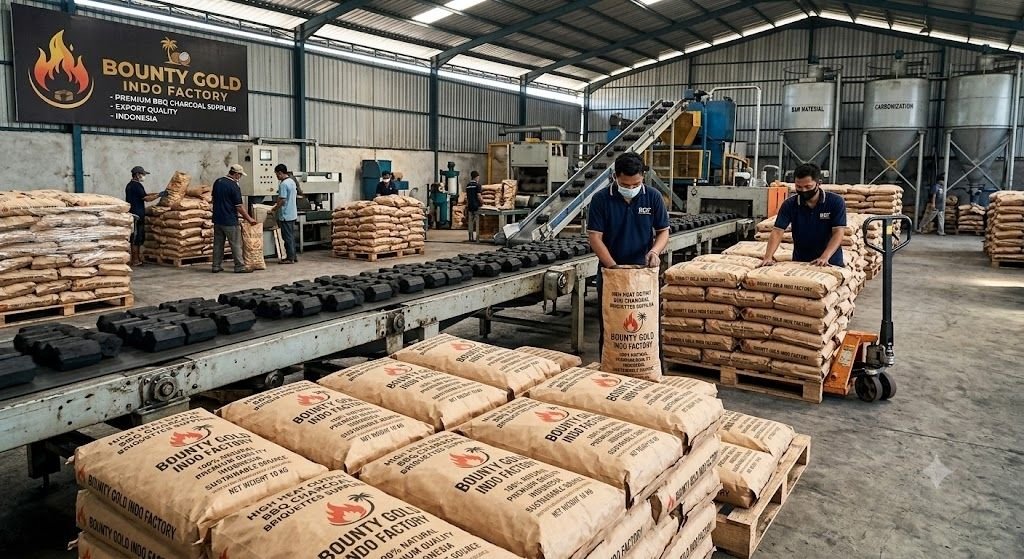
This is where Bounty Gold Indo Factory excels. As a premier manufacturer and exporter based in the heart of Indonesia’s charcoal production region, they have solidified their reputation as a trusted pillar in the global supply chain.
Commitment to Uncompromising Quality
Bounty Gold Indo Factory specializes strictly in producing high quality compressed natural charcoal for export. By maintaining absolute control over the entire supply chain—from sourcing the raw coconut shells directly from local farmers to the final stages of oven drying and packaging—they ensure every batch meets stringent international standards. Their products guarantee high fixed carbon, pure white ash, and an utterly smokeless, odorless burn.
Scalability and Reliability
One of the biggest pain points for global distributors is a factory’s inability to scale. Bounty Gold Indo Factory possesses the infrastructure and output capacity to fulfill high-volume container orders consistently, ensuring your business never faces stock shortages.
Custom Packaging and OEM Services
Understanding that branding is everything in retail, Bounty Gold Indo Factory offers comprehensive OEM (Original Equipment Manufacturer) services. They provide custom inner boxes, plastic wrapping, and durable master corrugated carton boxes, allowing you to import premium charcoal already packed and branded with your company’s logo, ready for direct distribution to supermarkets or lounges.
For more information, spec sheets, and wholesale inquiries, you can visit their official digital storefront at bountygoldindofactory.com.
7. Navigating Logistics: Packaging, Shipping, and Incoterms
Exporting charcoal requires specialized knowledge, as charcoal (specifically carbon) can be classified as a hazardous material (spontaneously combustible) under maritime law if not properly tested and certified.
A highly authoritative supplier like Bounty Gold Indo Factory understands these export compliance laws inside and out. To ensure safe, legal, and smooth transit, premium charcoal for export must be accompanied by:
- MSDS (Material Safety Data Sheet)
- SGS Certification (or equivalent independent lab testing)
- Self-Heating Test Certificates
- Certificate of Origin (COO)
Charcoal is typically shipped in 20ft or 40ft High Cube (HC) containers. A standard 20ft container can hold approximately 17 to 18 metric tons, while a 40ft HC can hold up to 25 to 26 metric tons, depending on the packaging style and palletization. By working with an experienced factory, importers are guided through optimal container loading strategies to maximize freight efficiency and lower the landed cost per kilogram.
8. Conclusion: A Strategic Investment for Your Business
The global shift towards sustainable, high-performance energy solutions is not a passing trend; it is the new permanent standard. Consumers are educated, and they demand the best. Sourcing high quality compressed natural charcoal for export is a strategic move that guarantees customer satisfaction, premium retail pricing, and long-term brand loyalty.
By looking toward Indonesia, the undisputed heartland of charcoal manufacturing, and partnering with an authoritative, transparent, and highly experienced manufacturer like Bounty Gold Indo Factory, you are securing a competitive edge in a booming multi-billion-dollar global market. Make the switch to sustainable, premium compressed charcoal today, and fuel your business’s future growth.
#charcoalforexport #premiumcharcoal #bountygoldindofactory #indonesiancharcoal #shishacharcoal #coconutcharcoal #bbqcharcoal #naturalcharcoal #compressedcharcoal #charcoalsupplier #ecofriendlyfuel https://bountygoldindofactory.com